






 English
What a Single-Beam Spunbond Nonwoven Machine Produces and Why It Matters
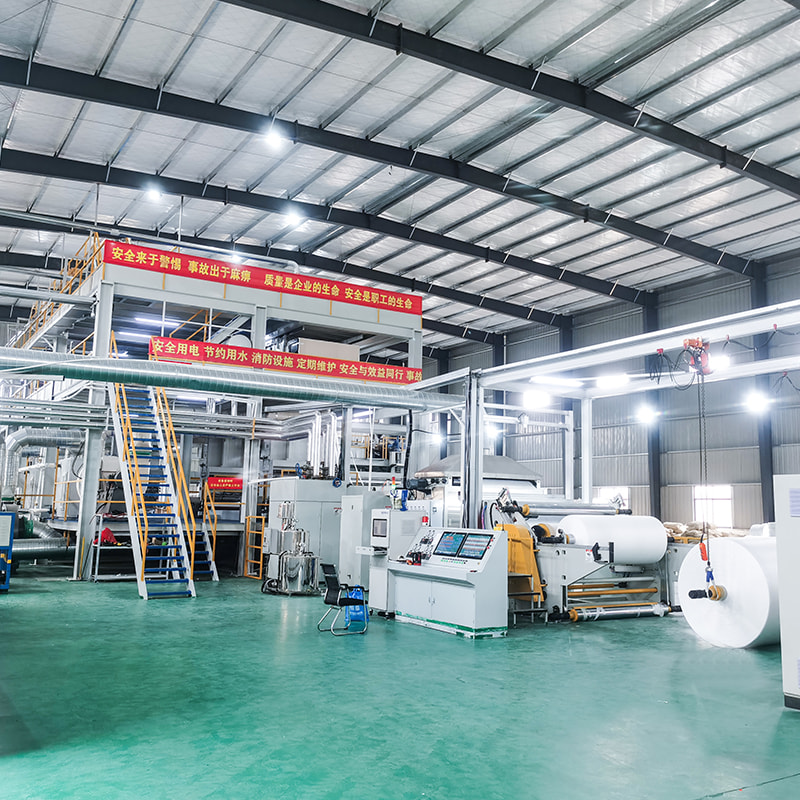
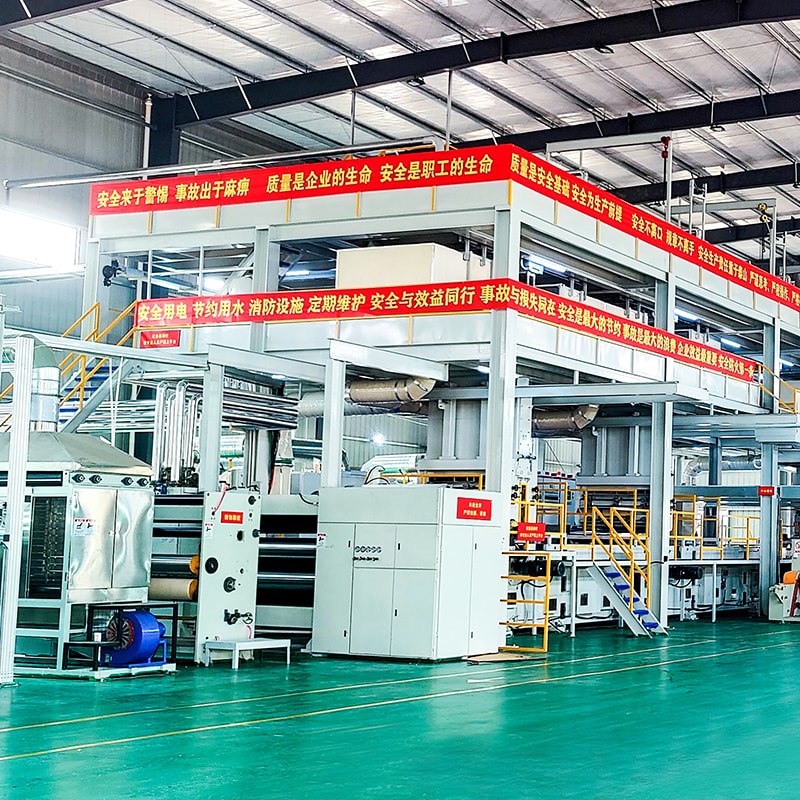
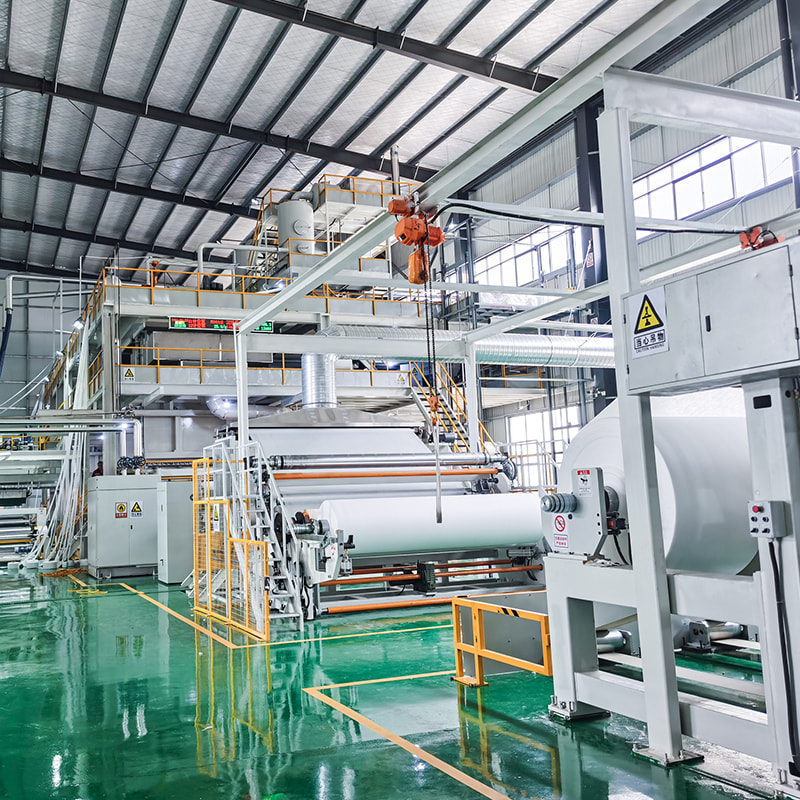
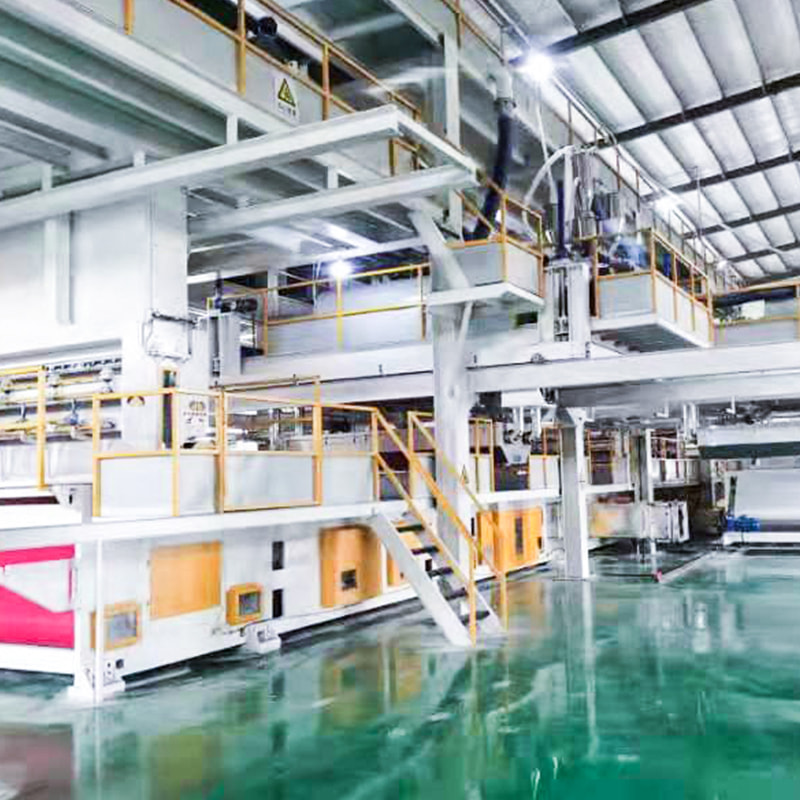
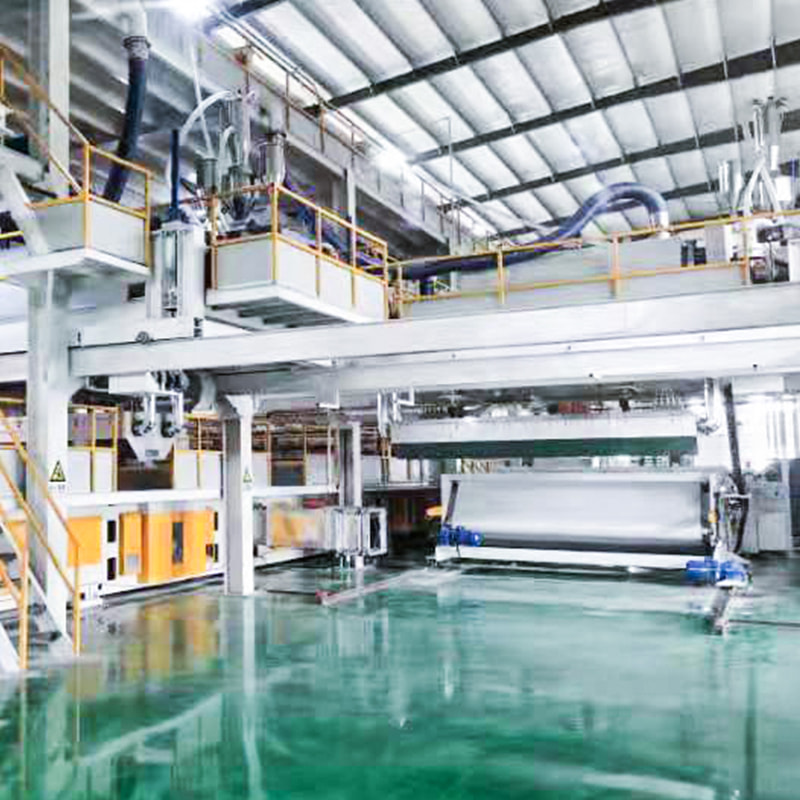
A single-beam spunbond nonwoven machine is used to manufacture spunbond nonwoven fabric by extruding polymer (commonly PP) into continuous filaments, drawing them on a single drawing beam, forming a web, and bonding it into roll goods. “Single-beam” typically means the filament drawing (attenuation) section is built around one beam/slot/duct set, which influences layout, energy use, and achievable speed compared with multi-beam arrangements.
This equipment is widely chosen when you need a practical balance of throughput, quality consistency, and investment cost—especially for hygiene backsheet/coverstock, medical drapes, agriculture covers, and general-purpose packaging/nonwoven substrates.
When “single-beam” is the right fit
- You target mainstream basis weights (for example, 10–60 gsm ) where stable filament formation and uniform bonding are more important than extreme high-speed output.
- You want fewer drawing elements to tune (compared with multi-beam), which can simplify start-up and operator training.
- You plan to compete on reliability, predictable OEE, and product repeatability rather than chasing the highest possible line speed.
Process Flow: From Pellets to Finished Spunbond Rolls
Understanding the end-to-end flow helps you specify the right modules and diagnose quality issues faster. A typical single-beam spunbond nonwoven machine line includes the steps below.
Core production stages
- Polymer handling : drying (if required), dosing, and conveying to keep melt quality stable and reduce gels/black specks.
- Extrusion and melt filtration : the extruder melts resin; screen changers/filters remove contaminants to protect the spinneret and improve filament consistency.
- Metering and spinning : gear pump spinneret produce uniform filament flow; temperature stability and spinneret cleanliness drive uniformity.
- Quench and drawing (single-beam) : air quench solidifies filaments; the single drawing beam attenuates them to the target filament fineness and improves tensile properties.
- Web forming : filaments are laid on a moving belt; vacuum and airflow management control fiber laydown and basis-weight profile.
- Bonding (calender) : thermal point bonding (most common) fuses filaments at patterned points; bonding temperature/pressure affect strength, handfeel, and softness.
- Winding and finishing : edge trim, tension control, slitting (optional), and automatic roll change define customer-ready roll geometry.
Practical takeaway: defects usually originate from a mismatch between melt quality , air management (quench/draw/vacuum), and bonding energy . Managing these three pillars systematically yields the fastest improvement.
Typical Specifications and an Output Calculation You Can Reuse
Exact specs vary by OEM and fabric target, but the ranges below are commonly used for sizing utilities, estimating production, and aligning product expectations. Treat them as planning ranges and validate against vendor guarantees during procurement.
| Parameter | Common Planning Range | What It Affects |
|---|---|---|
| Effective fabric width | 1.6–3.2 m | Output, roll size, market compatibility |
| Basis weight (gsm) | 10–60 gsm (specialties wider) | Strength, opacity, softness, cost/kg and cost/m² |
| Line speed | 200–600 m/min (application-dependent) | Throughput, formation stability, bonding window |
| Polymer throughput | 300–1,200 kg/h | Extruder sizing, energy, filter load, productivity |
| Energy intensity | 1.2–2.5 kWh/kg (site utilities matter) | COGS, cooling load, compressor/fan sizing |
Reusable output math (worked example)
If you run 15 gsm fabric at 3.2 m width and 300 m/min speed:
- Area per minute = 3.2 × 300 = 960 m²/min
- Mass per minute = 960 × 0.015 = 14.4 kg/min
- Mass per hour = 14.4 × 60 = 864 kg/h
This quick calculation is useful when comparing vendors: if a proposed extruder is rated far above or below the implied polymer demand, ask how the OEM expects you to meet formation and bonding stability at your target speed.
Key Modules That Determine Quality on a Single-Beam Line
In practice, you can predict most fabric outcomes by how well four modules are engineered and controlled: melt cleanliness, air management, web formation, and bonding. On a single-beam spunbond nonwoven machine , “air management” is especially central because draw stability and laydown uniformity are tightly coupled.
Melt system: stable flow beats maximum output
- Prioritize filtration capacity and easy screen changes to reduce gel spikes; less contamination means fewer broken filaments and fewer holes.
- Gear pump stability supports consistent denier and reduces basis-weight streaks.
Quench and single-beam drawing: control the “invisible” variables
- Uniform quench airflow helps prevent filament sticking/fusing before laydown; uneven quench often appears as cloudy bands or weak MD/CD zones.
- Draw pressure and temperature window should be tuned to avoid “shot” (thick fibers) vs. over-attenuation (breaks, fly, and web instability).
Calender bonding: where strength, softness, and opacity trade off
For point bonding, increasing bonding energy typically increases tensile strength but can reduce softness and bulk. A practical operating rule is to tune bonding in small steps and track three indicators together: tensile , elongation , and handfeel (or thickness/bulk).
Quality Metrics and Acceptance Targets Used in Real Production
A strong QC system links measurements to controllable process knobs. The table below maps common spunbond metrics to what operators can actually adjust on a single-beam spunbond nonwoven machine .
| QC Metric | What to Monitor | Primary Knobs |
|---|---|---|
| Basis weight uniformity | MD/CD profile, streaks, CV% | Spin pump stability, airflow balance, vacuum, laydown geometry |
| Tensile strength (MD/CD) | Strength vs. spec, break mode | Bonding temp/pressure, line speed, polymer MFR selection |
| Elongation | Ductility vs. brittleness | Bond pattern/energy, quench/draw settings |
| Air permeability / porosity | Breathability, filtration feel | Fiber attenuation, web formation, bonding level |
| Defects (holes, thin spots) | Counts per roll, location patterns | Filter condition, spinneret cleaning, draw stability, belt/vacuum integrity |
A practical rule for improving yield: prioritize actions that reduce roll-level defects first. Even if tensile improves, holes and weak streaks usually cause the largest downstream customer complaints and claim costs.
Common Defects, Root Causes, and Corrective Actions
Troubleshooting is fastest when you link each defect to a short list of root causes. The examples below focus on issues frequently seen on a single-beam spunbond nonwoven machine .
| Defect | Likely Root Causes | Corrective Actions |
|---|---|---|
| Holes / thin spots | Broken filaments, vacuum leaks, belt damage, gel contamination | Check filters/screens, inspect belt/vacuum seals, stabilize draw pressure |
| CD streaks | Uneven quench air, partial spinneret blockage, airflow imbalance | Balance quench zones, clean spinneret, verify air duct uniformity |
| Fuzzy surface / fly | Over-attenuation, unstable draw, low bonding energy | Reduce draw intensity, improve pressure stability, increase bonding slightly |
| Brittle fabric | Excessive bonding temperature/pressure, resin mismatch, low elongation | Lower bonding energy, confirm MFR grade, adjust speed-to-bonding window |
Most persuasive diagnostic tactic : check whether defects are periodic (mechanical/tension-related), localized (airflow/vacuum zone), or random (melt contamination). That pattern narrows the root cause quickly.
Maintenance Strategy That Protects Uptime and Fabric Consistency
A single-beam line can run with strong OEE if maintenance is planned around contamination control, air system health, and calender condition. The objective is not only preventing breakdowns, but also preventing “slow drift” that degrades fabric quality over weeks.
| Module | Routine Checks | Typical Cadence |
|---|---|---|
| Filters / screen changer | ΔP trend, contamination, changeover timing | Daily trend review; change as needed |
| Spinneret | Blocked holes, drips, streak correlation | Planned cleaning based on defect rate |
| Air systems (quench/draw) | Fan vibration, filter media, airflow uniformity | Weekly checks; monthly deep inspection |
| Calender | Roll temperature stability, nip pressure, pattern wear | Shift checks; pattern audit quarterly or per wear |
| Winder | Tension sensors, shaft/runout, roll hardness consistency | Daily checks; monthly calibration |
If you track only one maintenance KPI, use defects per ton alongside downtime. It catches hidden deterioration (filters, airflow imbalance, calender wear) before it becomes a stoppage.
Cost Drivers and How to Make the Line More Competitive
For most spunbond products, resin dominates COGS, but utilities and yield losses decide who wins bids. The most constructive cost work focuses on the variables you can control day-to-day on a single-beam spunbond nonwoven machine .
Three levers that usually produce measurable savings
- Yield improvement : reducing holes, streaks, and edge waste often beats incremental energy optimization because it recovers sellable tonnage.
- Energy normalization (kWh/kg) : measure by product recipe; if kWh/kg rises, look first at airflow resistance (filters/ducts) and calender temperature control stability.
- Recipe standardization : locking a narrow operating window for each SKU reduces changeover scrap and improves repeatability for customers.
A practical benchmark to target internally is stable roll-to-roll quality at the highest speed that still preserves your defect rate threshold . Running faster while producing more second-grade rolls typically increases total cost.
Buyer’s Checklist: What to Specify When Sourcing a Single-Beam Spunbond Nonwoven Machine
When comparing suppliers, request evidence tied to your intended products—trial data, guaranteed ranges, and references running similar gsm and speed. The checklist below is designed to prevent “spec compliance but performance disappointment.”
Commercial and technical items to lock down
- Guaranteed product window : width, gsm, speed, and tensile/elongation targets with acceptance rules.
- Utilities and footprint : power, compressed air, cooling, exhaust, and building constraints with worst-case values.
- Automation scope : profile control, tension control, auto doffing, online inspection, and how alarms translate into operator actions.
- Wear parts and lead times : spinnerets, calender sleeves/rolls, filters, belts—confirm spares list and delivery SLAs.
- Ramp-up plan : commissioning, operator training, and the OEM’s structured process to reach target OEE and first-pass yield.
If you need a single question that reveals most differences among vendors, ask: “Show your defect rate and basis-weight profile stability at my target gsm and speed, for a full roll.” This forces a performance discussion rather than a brochure discussion.


 +8613621544385
 No.29 Xinhua Road, Jiashan Village, Jiaxing City Zhejiang PR, China